


Abstract created by Good Solutions AI
In abstract:
- Macworld explores switching from Apple Watch to Whoop band, a subscription-based health tracker specializing in Sleep, Restoration, and Pressure metrics fairly than exercise rings.
- Whoop presents 10-day battery life with steady charging and makes use of intuitive well being steerage, although its AI coach is criticized as an underdeveloped chatbot.
- The expertise suggests Apple ought to undertake related subscription fashions, multi-day battery life, and AI-driven customized well being insights for future competitiveness.
Since taking on the Well being and Health areas final yr with the departure of Jeff Williams, companies chief Eddy Cue has apparently determined that Apple must “transfer sooner and be extra aggressive,” pointing to gadgets just like the Oura ring and Whoop band as widespread rivals that do extra thrilling and helpful well being monitoring.
Earlier this yr, we wrote a few rumor that Apple’s upcoming well being companies overhaul, dubbed Well being+, was being scaled again. However on this case, “scaled again” may imply extra options, sooner. Apple has additionally been rumored to be engaged on an AI-powered well being and health coach for a very long time, however that was nonetheless a great distance off. It, too, has been allegedly scaled again to maneuver sooner with particular person options that may ship as quickly as this yr.
I don’t know what Apple’s present plans are, however I’ve now used a Whoop 5.0 band all day, on daily basis for 2 months, and there are some nice concepts right here that Apple ought to undoubtedly steal—and some horrible ones they need to completely keep away from.
A band you by no means take off
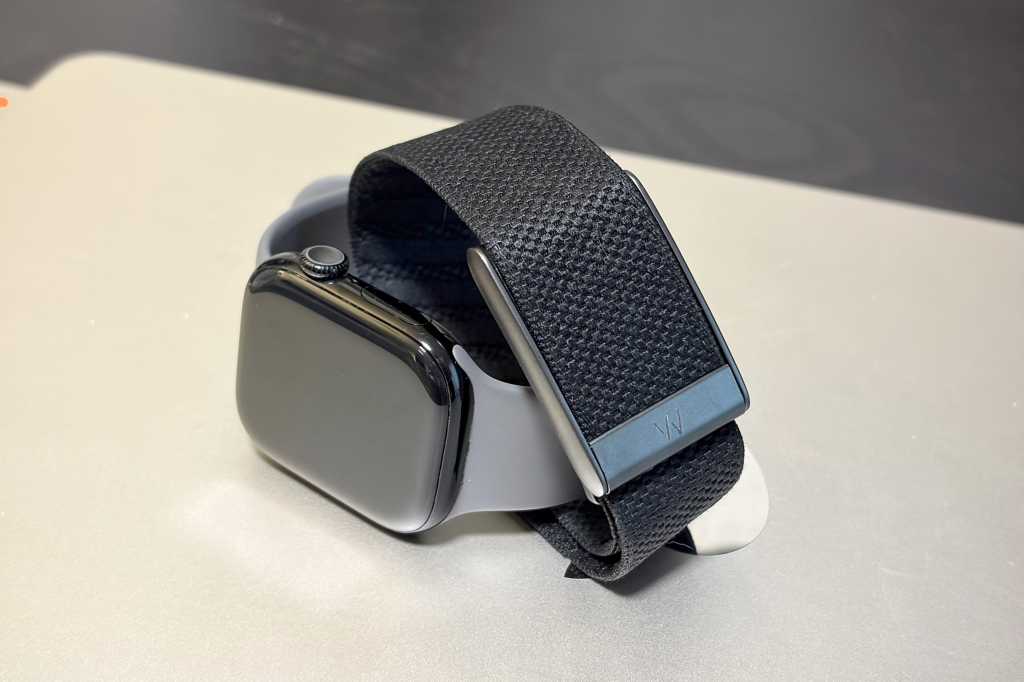
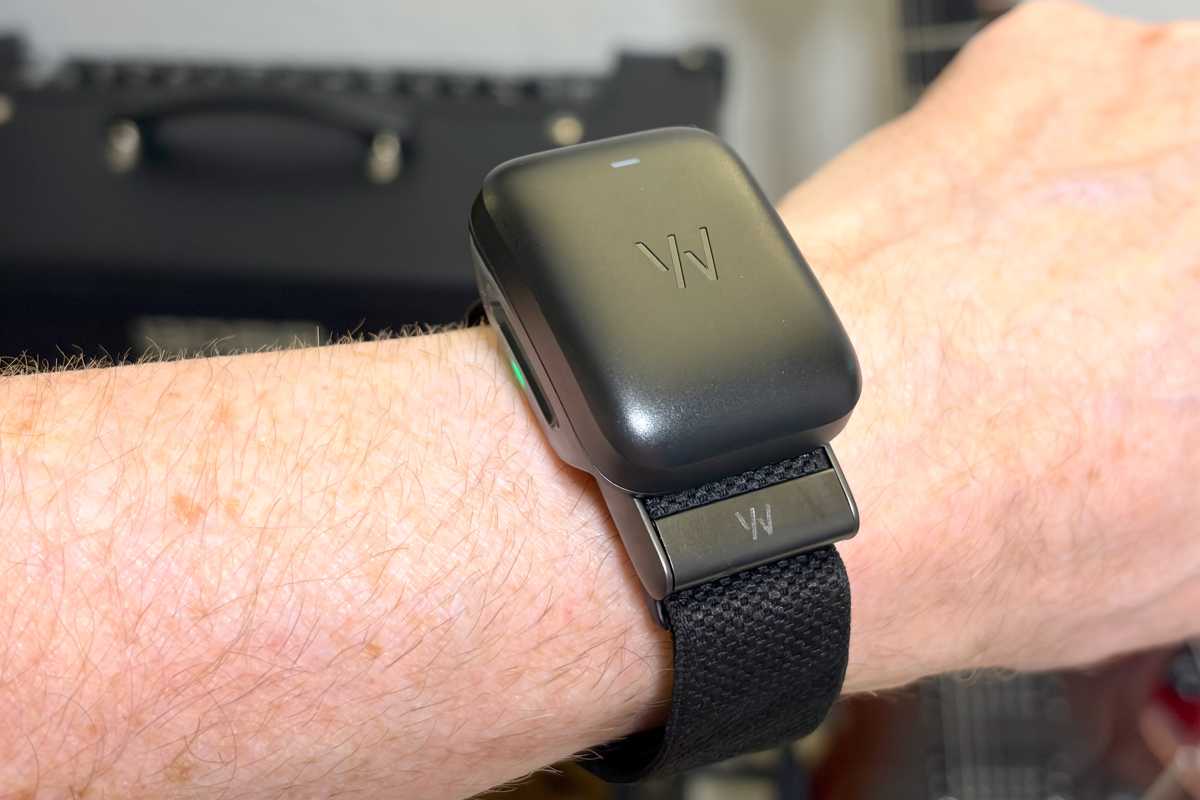
Whoop is a really totally different product from what Apple customers are used to sporting. It’s a pure well being and health band that doesn’t inform the time or present notifications. It doesn’t run apps. It has no microphone, speaker, buttons, dials, or show. Relatively, it gathers knowledge by means of a wide range of sensors that it sends through Bluetooth to the Whoop app, the place it’s processed through a cloud service.
The principle benefit of Whoop’s restricted performance is its extraordinarily lengthy battery life. Regardless of being smaller and lighter than the Apple Watch (26 grams together with band, vs 30 grams for a 42mm Apple Watch and not using a band), the Whoop battery lasts for an excellent 10 days or so. It’s charged with just a little clip-on battery pack that slides excessive, as there isn’t any show to dam. It’s awkward to put on whereas charging, however just for an hour or so as soon as each 10 days.
Foundry
In different phrases, Whoop is designed to be worn on a regular basis, day and night time, even whereas being charged. That’s a problem for the present Apple Look ahead to quite a few causes. However any future Apple Watch needs to be engineered round just a few elementary necessities: multi-day battery life, the power to cost with out taking it off, and superior consolation in sensitive conditions like sleeping.
Pressure and restoration
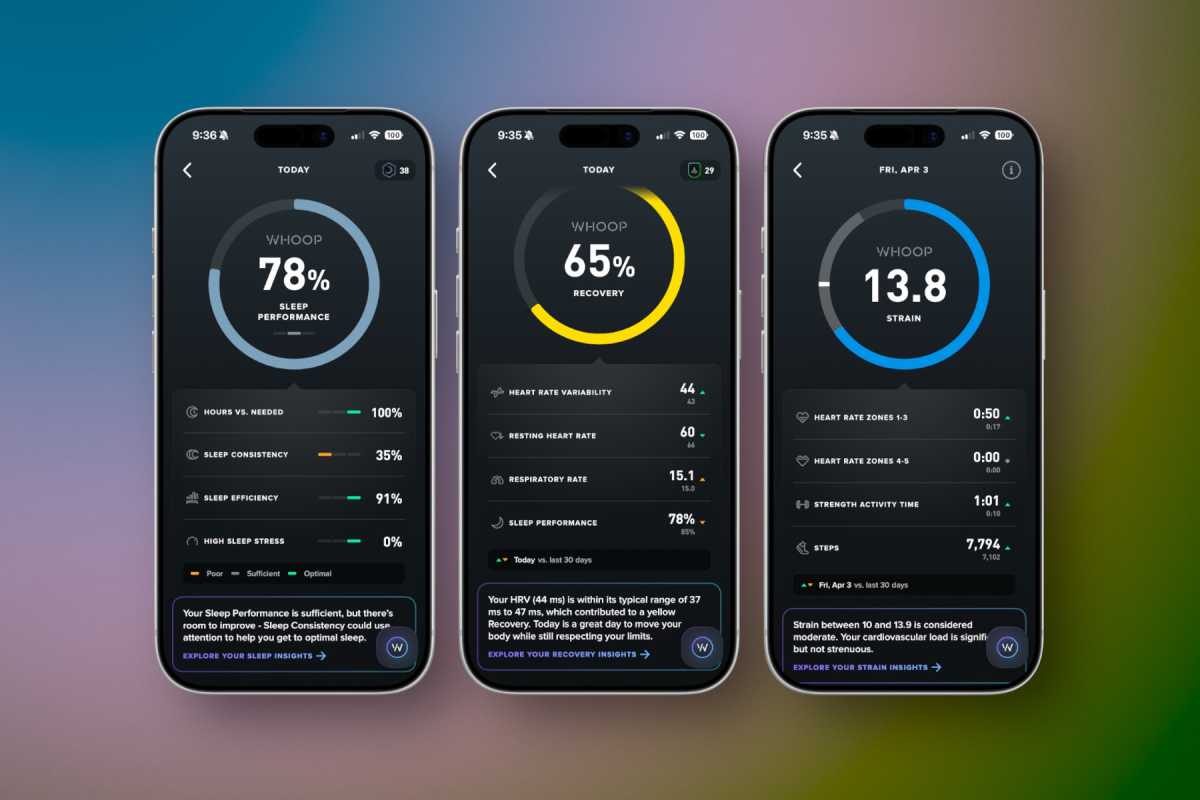
Whoop’s well being monitoring is constructed round two elementary metrics: pressure and restoration. Each are metrics of Whoop’s personal design, and maybe not absolutely defensible from a scientific perspective, however as a consumer, it’s a pleasant, straightforward manner to consider day-to-day health and well being.
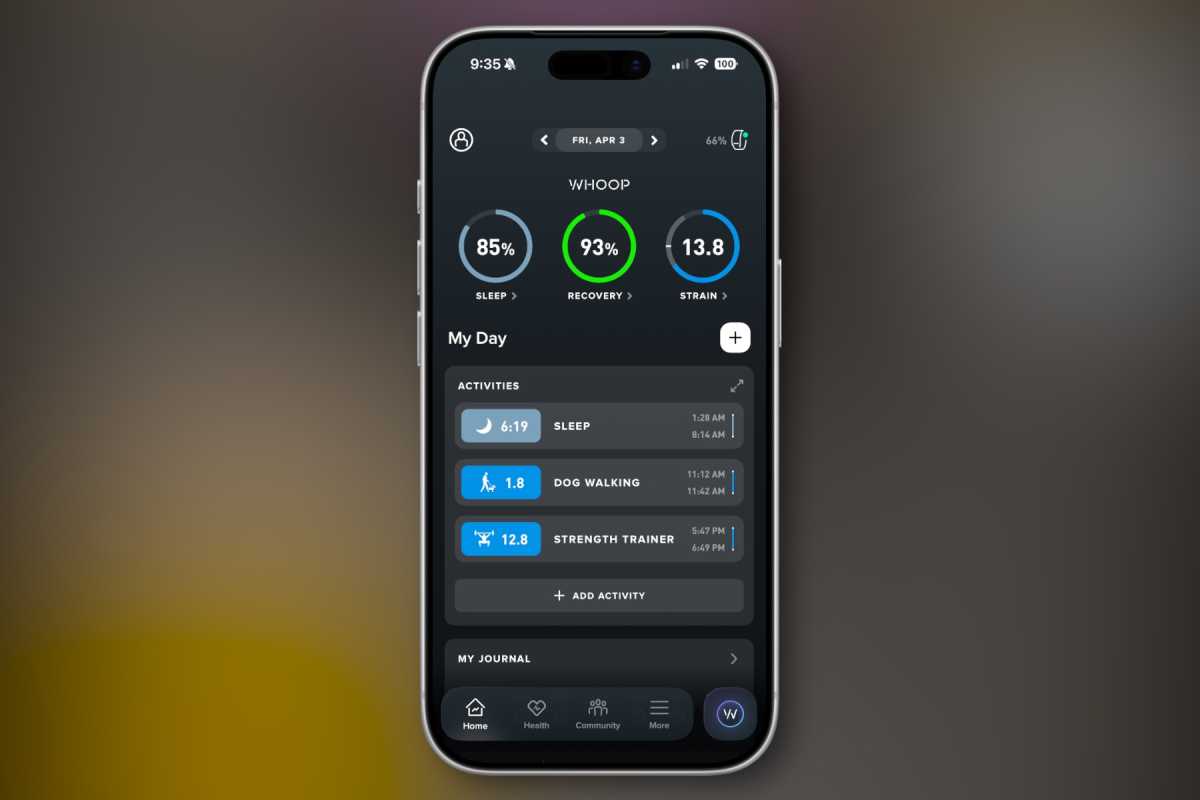
Pressure is a logarithmic rating that tries to measure how a lot you’re placing your physique by means of. Larger cardio charges or heavier muscular load make you construct up pressure sooner. Every exercise you observe is given a “Pressure” worth, and all of it provides as much as a “Day Pressure” quantity.
Foundry
Is it a medically correct strategy to measure how onerous you push your self? It’s onerous to say. However the idea is sound: give customers a easy quantity that lets them see how a lot they put their physique by means of through the day. This can be a lot extra helpful than Apple’s exercise rings, and it’s the pure companion to restoration, the opposite huge Whoop metric.
Just like the Apple Watch, the Whoop band auto-detects sleep (and naps) whereas utilizing your motion, coronary heart fee, temperature, and different metrics to find out if you find yourself in several sleep phases. It then takes your sleep period in numerous sleep phases to find out how nicely you slept, just like Apple’s Sleep Rating. That, mixed along with your resting coronary heart fee and coronary heart fee variability, produces a “Restoration Rating.” It’s a easy 0-One hundred pc quantity computed every morning that lets you know the way a lot your physique has recovered from the pressure you placed on it.
That’s the ebb and move of Whoop: work and relaxation. It’s clearly extra difficult behind the scenes, however for customers, it’s a quite simple and efficient strategy to make well being choices. You probably have an incredible restoration day, Whoop will counsel a better “Day Pressure” goal—you’ll be able to push your self on the health club or go for an extended run. Should you had a horrible restoration, you’ll know to take it straightforward immediately.
Apple Watch has all of the expertise it must do one thing related, nevertheless it must compute and current well being knowledge in a extra intuitive manner. How onerous am I working? Did all that yard work imply I ought to skip the health club? Ought to I loosen up immediately for the reason that canine woke me up 3 times final night time to bark at ghosts? Apple’s exercise rings don’t inform me this. Whoop’s easy metrics do.
An insightful Journal
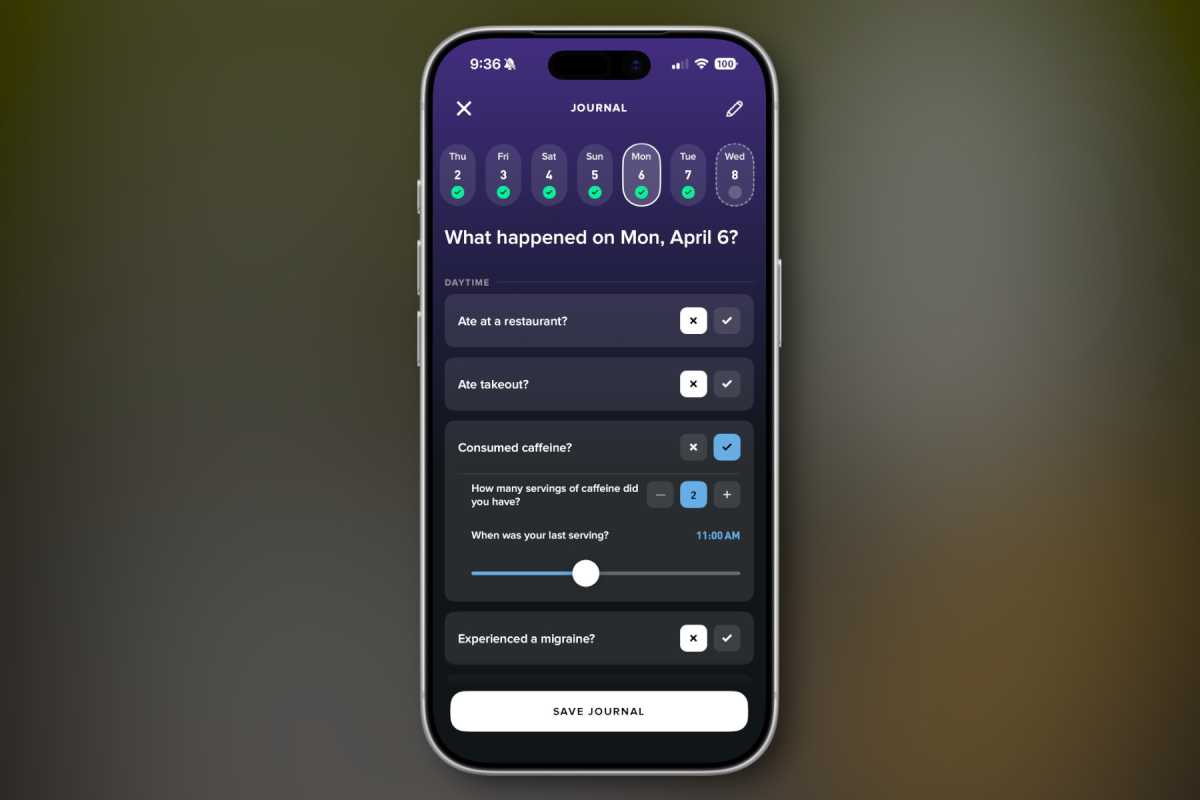
Maybe my favourite characteristic of Whoop is the Journal. Each day, you reply a sequence of sure/no questions on your habits that day.
- Did you devour alcohol? (How a lot, and when?)
- Drink caffeine?
- Get a migraine?
- Eat breakfast?
- Eat dairy?
- Put on earplugs to mattress?
- Take melatonin?
- Use tobacco?
- Take a trip day?
There are lots of of behaviors on the listing from which you choose whichever ones you wish to be part of your each day journal. Each day, you spend 30 seconds or so tapping sure or no or dragging a slider or two to fill out your customized journal.
Foundry
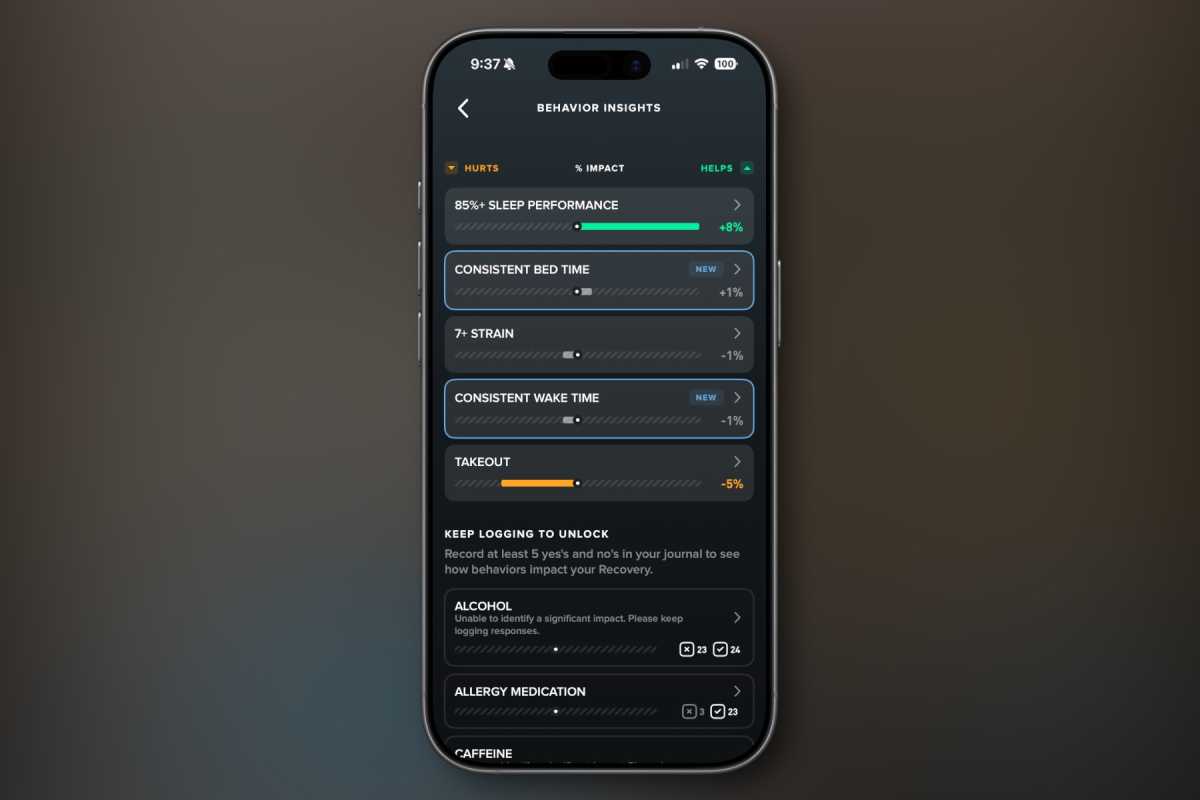
The magic is available in the way in which Whoop appears at your well being metrics and restoration in relation to your solutions to those questions. As soon as it will get sufficient knowledge to construct robust correlations, it may possibly inform you how your behaviors have an effect on your restoration.
When I’ve a drink at night time, my restoration suffers. Once I learn in mattress (not on a display screen), my restoration is best. Possibly late exercises are unhealthy for you and early exercises are higher. Possibly you sleep badly when you will have caffeine after 3 pm. Possibly you will have a foul night time whenever you neglect to take your allergy treatment. Whoop will inform you.
Foundry
Greater than the rest, I actually need Apple to supply a characteristic like this. I’d like to hold a easy each day habits journal, all encrypted on-device in my Well being app, and let Apple Intelligence discover associations between the issues I do and the well being outcomes this suite of sensors on my wrist measures.
That is the form of factor Apple Intelligence could be good for—processing advanced knowledge units and distilling them all the way down to easy insights. Holding private particulars personal is what Apple is sweet at, and offering quantifiable insights into how our each day decisions and habits have an effect on our well being is the lacking hyperlink from most health companies.
A horrible assistant
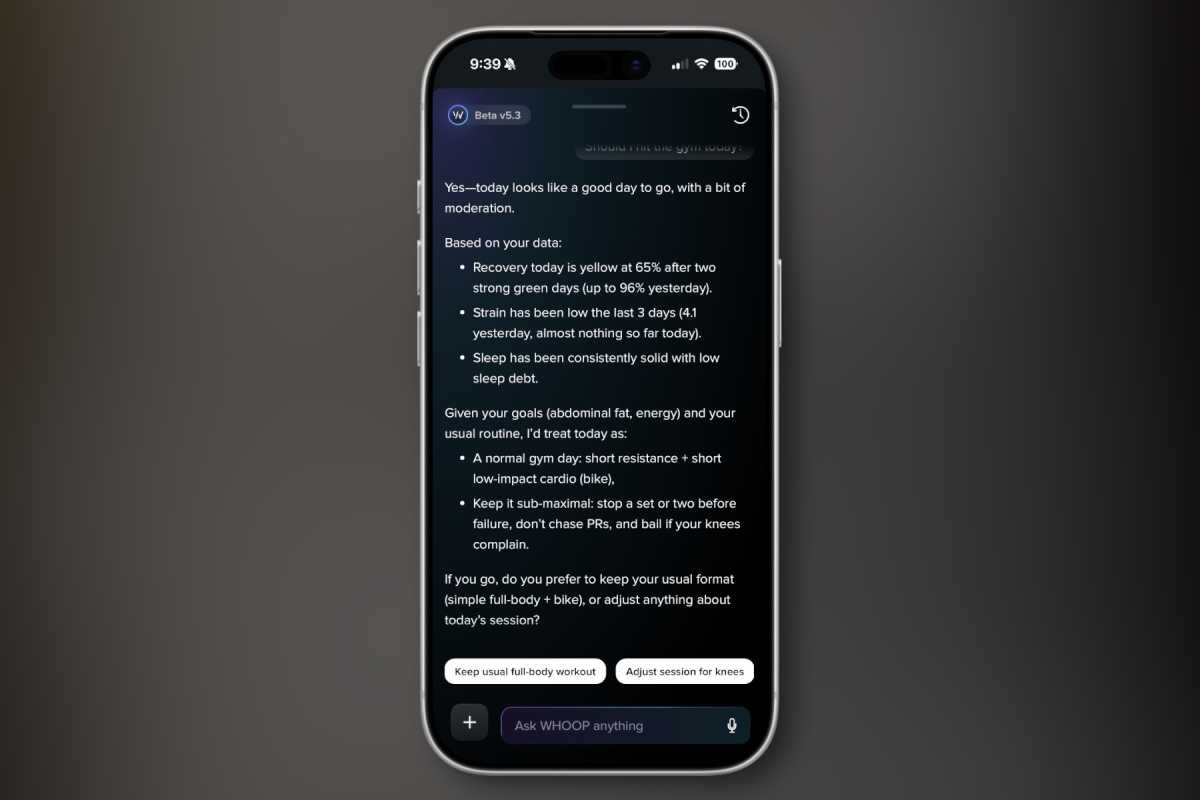
Talking of AI, Whoop is pleased with its AI well being coach, nevertheless it’s nothing greater than an terrible LLM chatbot. The Whoop AI assistant, nonetheless in some way in “beta” at model 5.3, has a foul case of LLM fever. You understand, the essential construction of nearly each LLM chatbot:
- Praise or agree with the consumer.
- Present your experience with a knowledge dump, often utilizing bullet factors.
- Provide a reasonably apparent suggestion or hallucinate a fallacious end result.
- End with a query that prompts to consumer to decide on a brand new factor for the LLM to do, as a way to maximize engagement.
The Whoop chatbot can do issues like make exercises or provide you with “insights” primarily based on all the info within the Whoop app, nevertheless it’s all form of suspect, as if you happen to simply requested ChatGPT to do the identical factor as an alternative of an actual health coach. And it’s all caught within the chatbot interface, as an alternative of creating actual graphics, graphs, or utilizing the remainder of the app.
Foundry
AI-generated exercises are about the one place the AI actually meshes with the remainder of the app, and there’s nothing notably particular about it. You possibly can ask any widespread chatbot to make a exercise with the identical enter (timeframe and favourite or averted workout routines or muscle teams) and get one thing identical to what Whoop does.
It’s time for the rings to go
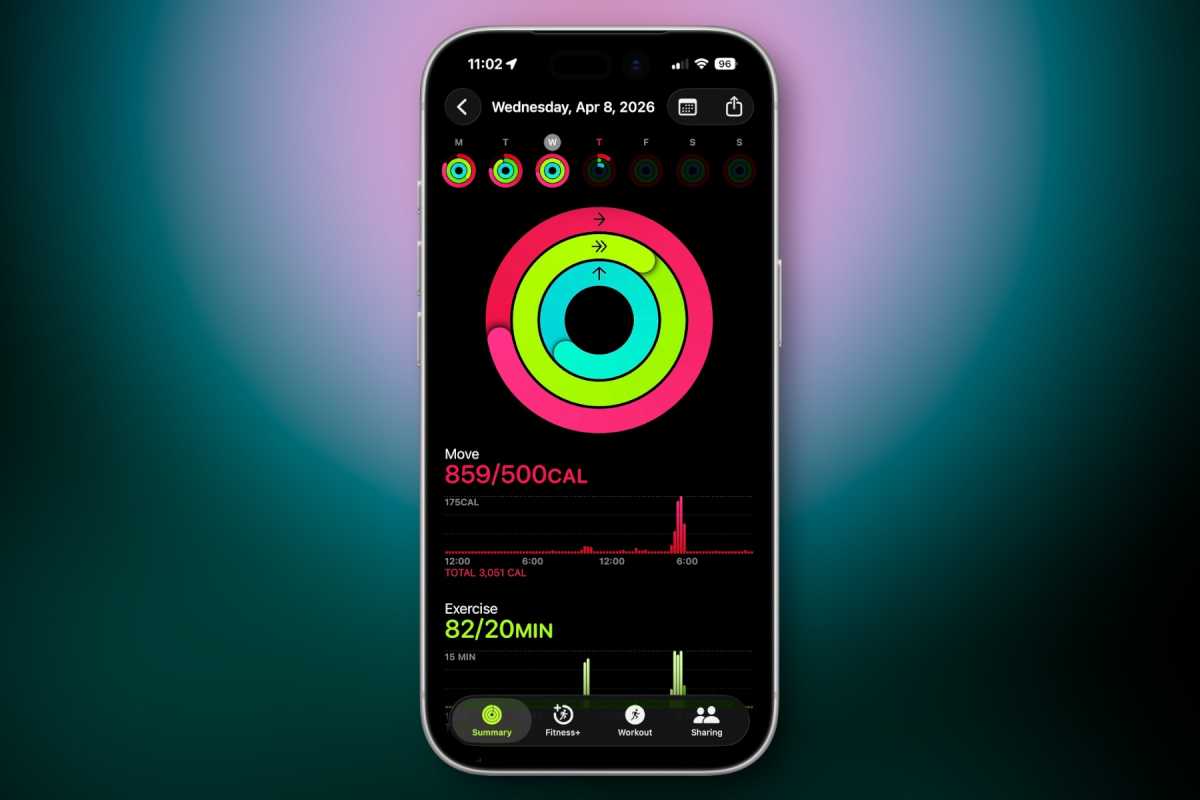
If I realized something from my two months with Whoop, it’s this: Apple Watch exercise rings have gotten to go. “Shut your rings” just isn’t a significant measure of something that folks really want to vary their health.
Foundry
Helpful metrics usually are not a linear quantity that at all times goes up. Standing for a couple of minutes eight instances a day just isn’t such an essential health metric that it needs to be measured alongside lively minutes. An train ring primarily based on time fairly than depth isn’t all that helpful both, and it doesn’t account for whether or not or not a specific day is an intense train day or a restoration day.
Foundry
As Apple rethinks its Health+ service and Apple Watch as a complete, it wants to begin from a basis just like what Whoop does: utilizing intelligence to mix the info from the system and the info provided by the consumer to grasp what actions you need to take. Take a sea of variables and make it easy: Are you well-rested, or do it is advisable take a break? Ought to immediately be a heavy day on the health club, or do you have to simply go for a stroll? Do you want a nap? Which of your habits are useful or dangerous, and why?
Whoop doesn’t absolutely ship on this promise, however at the least it’s constructed round these ideas. As Apple Watch and the companies it feeds evolve into the AI period, it must be constructed round these concepts as nicely.
A brand new strategy to promote Apple Watch?
Maybe one of the fascinating options of the Whoop is the way in which it’s bought. You’ll be able to’t use Whoop and not using a subscription, as all of its knowledge processing is within the cloud. There are three subscription tiers: One for $149 a yr ($199 renewal), Peak for $239 a yr, and Lifetime for $359. The trick is that the {hardware} is included.
So you could possibly see it as paying $250 or so for the tracker and getting the primary yr of service totally free, or getting the tracker totally free whenever you join a yr of service. Both manner, it’s the form of factor Apple ought to discover (although with a single subscription tier). There have been rumors of Apple increasing Health+ and new AI-powered Well being options right into a single service known as Well being+. Think about if this service is $15.99 a month, however they offer you two free years if you happen to purchase a brand new Apple Watch (or provide you with a free Apple Watch whenever you join two years of service).
That is simply the form of inventive strategy to tie the {hardware} and software program collectively in order that it appears such as you get lots of of {dollars} of worth, whereas getting customers invested within the ecosystem for an extended sufficient time period that they gained’t give up.

