


On paper, face swapping is not a technical problem. The underlying AI has matured rapidly, and outcomes have improved throughout the board. However for Mac customers, the expertise of really utilizing these instruments hasn’t all the time stored tempo.
But Mac customers have traditionally confronted a well-known drawback: many AI-powered instruments both prioritize Home windows ecosystems or rely closely on cloud workflows that compromise velocity, privateness, or high quality. That’s the place newer platforms like VidMage goal to shift the stability, providing a extra optimized expertise for Mac customers looking for dependable, high-quality face-swap options.
However how does a instrument like this truly match into the broader panorama of AI media enhancing? And, extra importantly, does it meet the expectations of Mac customers accustomed to subtle, performance-conscious software program?
Let’s break it down.
The Rising Demand for Face Swap on Mac
Search curiosity in “face swap for Mac” has grown steadily over the previous two years, pushed by three observable shifts in content material creation:
- The dominance of short-form video platforms (TikTok, Instagram Reels, YouTube Shorts)
- Wider accessibility of AI‑generated content material instruments
- A creator financial system that more and more values velocity and differentiation
Nonetheless, for macOS customers, most face‑swap options include friction:
- Open‑supply instruments typically require handbook setup—Python environments, dependency administration, and GPU configuration.
- Browser‑based mostly providers battle with massive video information and impose add limits.
- Skilled enhancing suites like Ultimate Lower Professional and Premiere Professional lack constructed‑in AI face‑swap options.
The result’s a transparent hole between what customers need—quick, clear, sensible face swaps—and what current instruments truly ship on Mac. VidMage positions itself straight inside that hole.
A Mac‑First Strategy to AI Face Swapping
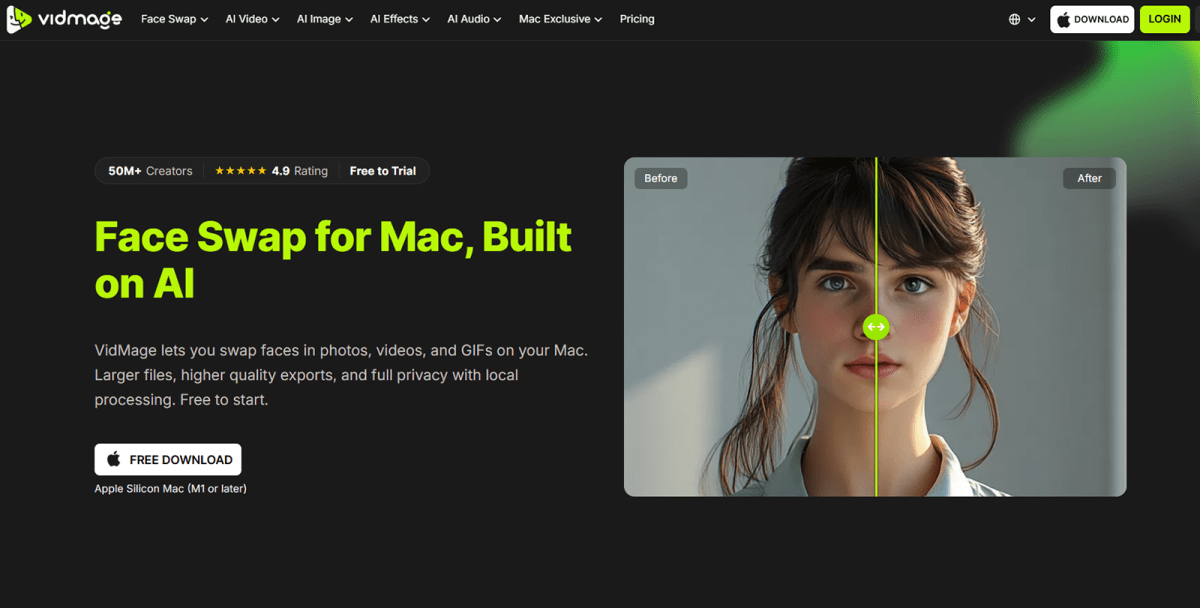
VidMage
The place many AI instruments deal with macOS as an afterthought, VidMage adopts a workflow clearly optimized for Mac customers. It runs natively on Apple Silicon (M1 or later) and processes all information regionally—no web connection required, no file dimension limits, and no uploads to exterior servers. The instrument helps batch processing for a number of information, 4K export decision, and computerized face detection and enhancement.
Core capabilities:
- Face swap in movies, photographs, and GIFs
- Native processing (information by no means go away the gadget)
- No file dimension or add restrictions
- Batch processing for a number of information
- 4K export help
- Computerized face detection and enhancement
As an alternative of requiring command‑line enter, GPU tuning, or third‑occasion libraries, VidMage streamlines the method right into a 4‑step pipeline:
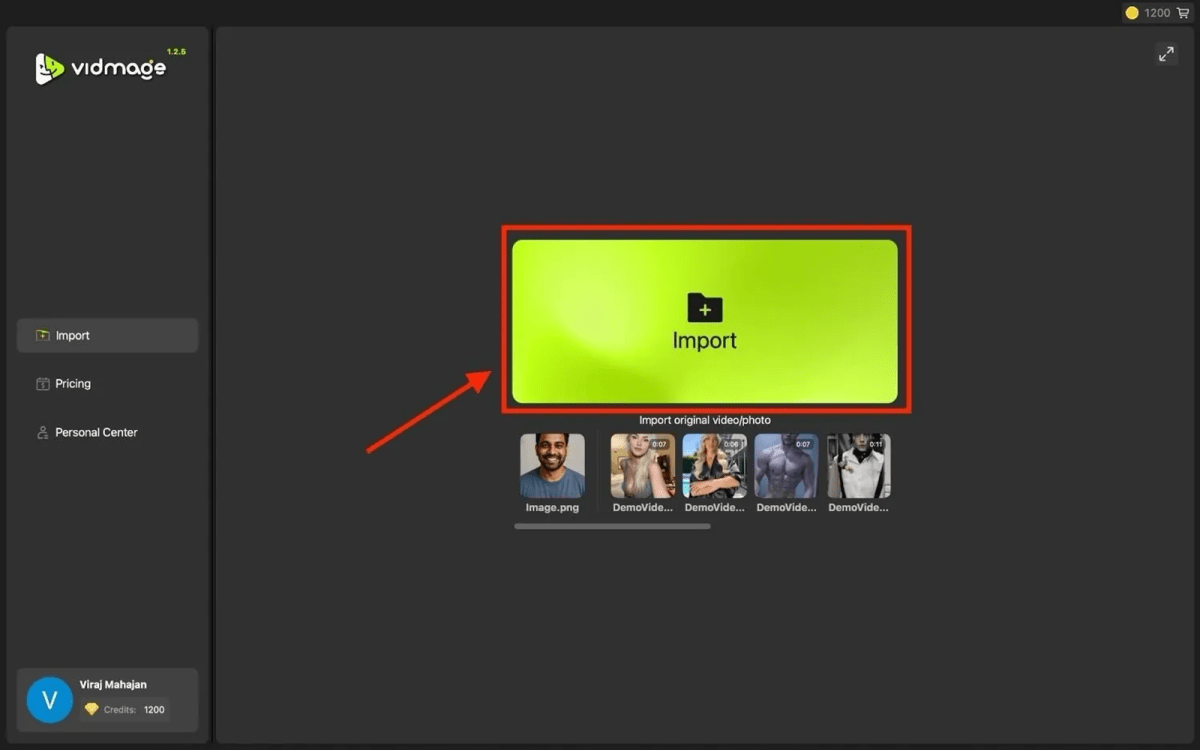
Step 1: Import supply media. Open the VidMage Mac app and import the video, picture, or GIF to be edited. The instrument helps all widespread media codecs and, as a result of processing occurs regionally, imposes no file dimension caps.
VidMage
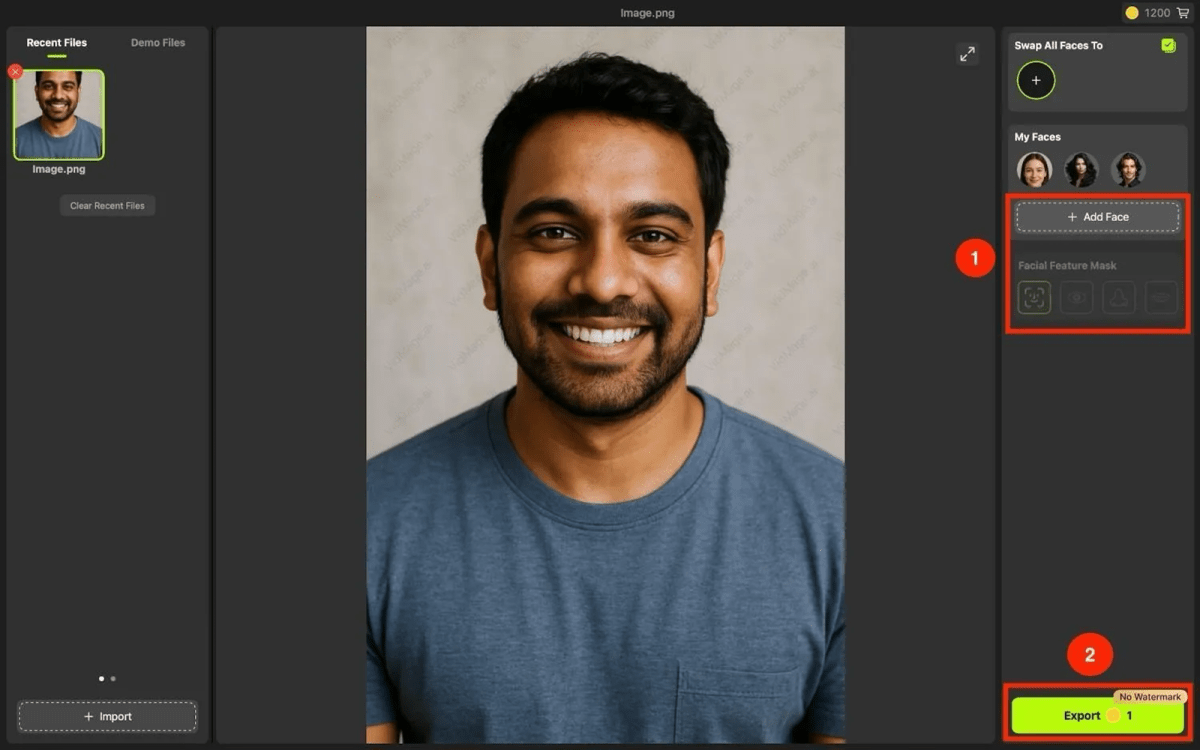
Step 2: Add the goal face picture. Add a transparent, nicely‑lit picture of the face to swap in (JPG or PNG advisable). For finest outcomes, the supply face picture ought to have good lighting and a totally seen face.
VidMage
Step 3. Select the facial function masks to swap solely the lips, mouth, or nostril.
Step 4. Export with minimal handbook adjustment
This workflow mirrors what Mac customers anticipate from instruments like iMovie or Pixelmator: targeted, environment friendly, and visually guided. The software program doesn’t require a local Apple Silicon construct to really feel at residence on macOS—although efficiency advantages are noticeable on M‑collection chips.
Evaluating Output High quality: Alignment, Lighting, and Movement
Face‑swap instruments usually fall into two camps:
- Fast however low‑high quality: apparent artifacts, poor edge mixing, and inconsistent lighting.
- Excessive‑high quality however technically demanding: requiring mannequin coaching, handbook keyframing, or GPU clusters.
VidMage makes an attempt to bridge that divide by prioritizing output realism with out demanding technical experience. In observe, that interprets into three areas:
Facial Alignment Precision
The AI mannequin emphasizes constant facial construction mapping, lowering widespread points resembling misaligned eyes, warped proportions, or unnatural expressions.
Lighting & Pores and skin Tone Adaptation
Mismatched lighting is likely one of the quickest giveaways in face‑swap content material. VidMage’s processing adjusts tone and publicity to higher match the goal scene—notably noticeable in video outputs the place lighting modifications throughout frames.
Movement Consistency in Video
For video swaps, body‑to‑body temporal consistency is vital. Many instruments break down right here, producing flicker or distortion. VidMage reduces these artifacts, delivering smoother outcomes appropriate for social media and lightweight skilled use.
The end result is just not Hollywood‑grade VFX, however it’s a clear step above novelty filters.
Conclusion
That’s the whole how‑to for face swap on macOS utilizing VidMage. No terminal, no cloud uploads, no file dimension nervousness. Only a native Mac app, a couple of clicks, and a swapped face that by no means leaves your drive.
The important thing takeaways are easy: use nicely‑lit, entrance‑dealing with supply footage for finest outcomes; maintain low‑gentle or quick‑movement clips below 15 seconds per render; and keep in mind that the free tier caps at roughly 20‑30 seconds of video each day. If you happen to want longer clips, batch processing, or 4K export, the paid plan removes these limits.
For Mac customers who worth privateness over comfort‑at‑any‑price, this workflow presents a uncommon mixture: native processing with out the same old open‑supply setup complications. Now go check it with your individual footage—you’ll see precisely the place it shines and the place a fast lighting repair makes all of the distinction.

